

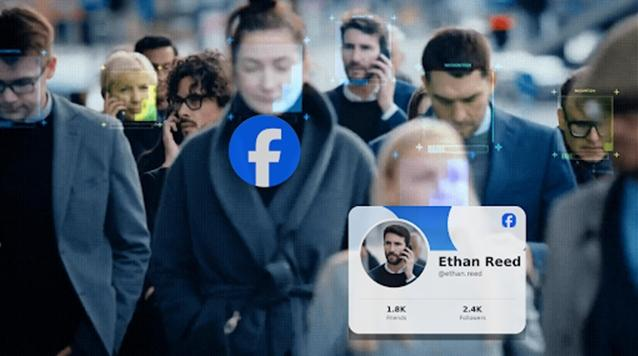
In the digital age, a person’s online footprint often speaks louder than their resume. From inappropriate public rants to subtle indicators of professionalism, social media is a treasure trove of behavioral data. However, manually sifting through years of tweets, Instagram photos, and LinkedIn updates is time-consuming, biased, and often incomplete. Enter Artificial Intelligence.
AI-driven tools like Socialprofiler are changing how we approach social media background check processes. But with great power comes great legal responsibility. While AI can make screening faster and fairer, it exists in a gray area between public information and private privacy rights. Understanding how to use these tools ethically – and legally – is the key to unlocking their potential without stepping into a lawsuit.
The Flawed Human Eye: Why Traditional Checks Fail
Before discussing the solution, we must acknowledge the problem. A human conducting a manual social media background check is inherently biased. If you are looking at a candidate’s Facebook profile, your brain is subconsciously noting their race, religion, gender expression, and political leanings based on profile pictures and cover photos.
Furthermore, humans suffer from “recency bias.” If you see one angry tweet from five years ago, you might ignore ten years of professional conduct. AI does not get tired, does not get angry, and does not unconsciously favor a candidate who likes the same sports team. AI processes raw data. When trained correctly, it looks for specific risk indicators (hate speech, threats, illegal activity) rather than subjective “weirdness.”
Enter Socialprofiler: Automation for Objectivity
Socialprofiler is designed to bridge the gap between total ignorance and invasive surveillance. Unlike simple Google searches that return irrelevant noise, Socialprofiler uses natural language processing (NLP) to scan public social media profiles for specific risk categories.
The tool aggregates public posts, comments, and likes to generate a risk score based on verifiable data. For example, it can identify if a user frequently engages with extremist groups or posts violent rhetoric. It does not judge personality; it judges patterns. This automation removes the emotional reaction from the equation. A user is no longer “argumentative” (a subjective label); they are flagged for “high frequency of aggressive language” (a data point).
The Absolute Red Line: FCRA Compliance
This is the most critical section of any discussion regarding Socialprofiler. The Fair Credit Reporting Act (FCRA) was established to protect consumers from inaccurate or misused information affecting their livelihood.
Socialprofiler is not FCRA-compliant and must not be promoted for employment background checks, tenant screening, housing-related decisions, credit decisions, or any other use covered under the Fair Credit Reporting Act.
Why is this distinction vital? If you use Socialprofiler to decide not to hire someone, you have just made an “adverse action” based on a non-compliant report. Under the FCRA, the subject of that report has the right to know what was in the file and dispute inaccuracies. Because Socialprofiler does not meet the strict accuracy, dispute, and procedural requirements of the FCRA, using it for hiring or housing is a direct violation of federal law.
The Right Way: Permissible Uses of Socialprofiler
So, if you cannot use it for employment or housing, what can you use it for? The answer lies in risk mitigation and personal due diligence where the FCRA does not apply.
Brand Reputation Management: Before signing a million-dollar influencer deal, brands use Socialprofiler to ensure the influencer hasn’t secretly been posting racist content on a secondary account. This is a vetting process, not a “job application.”
Dating and Personal Safety: Individuals can run a social media background check on someone they met online before meeting in person to ensure they aren’t a convicted predator or catfisher.
Volunteer Organizations: While you cannot screen paid employees, youth sports leagues or animal shelters can use Socialprofiler to screen volunteers (unpaid positions are generally exempt from FCRA hiring rules) for violent or abusive language.
Academic Integrity: Universities can screen prospective guest lecturers or coaches (contractors, not employees) to avoid PR disasters.
Avoiding Algorithmic Bias: The Fairness Factor
Even with AI, fairness is not automatic. If the AI is trained on biased data, it will produce biased results. For example, if an AI is trained primarily on Caucasian English speakers, it might misclassify AAVE (African American Vernacular English) slang as “aggressive” or “unprofessional.”
To run a fair social media background check, the AI must be blind to identity markers. Socialprofiler addresses this by stripping metadata (names, profile pictures) during analysis. The algorithm looks at the text: “I will kill you” vs. “I love my cat.” It does not know if the speaker is male, female, Black, white, young, or old. This “context blindness” regarding identity is actually a feature, not a bug, promoting fairness.
The Privacy Paradox: Transparency is Key
Using AI for background checks raises the question: Are you spying? The ethical line is drawn at public data. Socialprofiler only scans publicly available profiles. If a user has a private Instagram or locked Twitter account, the tool cannot access it.
To remain fair, users of Socialprofiler must adopt a policy of transparency. If you are a brand vetting an ambassador, tell the candidate. “We will be running a public social media audit for safety and brand alignment.” This allows the subject to explain context (e.g., “That post was a joke taken out of context three years ago”) before a decision is made.
Conclusion: A Scalpel, Not a Sledgehammer
AI is revolutionizing the social media background check, making it faster, cheaper, and less prone to human prejudice. Socialprofiler offers a powerful engine for this task, providing data-driven insights that the naked eye would miss.
However, the tool’s utility is strictly limited by law. Because Socialprofiler is not FCRA-compliant, it must never touch employment, tenant screening, or credit decisions. To do so invites legal ruin. Think of Socialprofiler as a scalpel for personal and brand safety, not a sledgehammer for hiring.

More Stories
Buy Mobile Proxies in the USA: What You Need to Know
Facebook Reverse Image Search for Spotting Misleading Dating Accounts
AI Tools